What Is Two-Way Encryption and Where Is It Used?
Understanding the mechanics of two-way encryption and where it is used helps demystify how digital privacy functions in our daily lives. At its core, this security method ensures that information remains readable only to those with the appropriate digital keys. Whether you are sending a private message or protecting a bank transfer, this technology acts as a silent guardian for your sensitive communications.
By exploring the technical foundations and real-world applications of these systems, you will gain a clearer picture of how data stays protected against unauthorized access. This article breaks down the complex world of modern cryptography into accessible, actionable insights for everyday users and professionals alike.
Defining the Mechanics of Two-Way Encryption
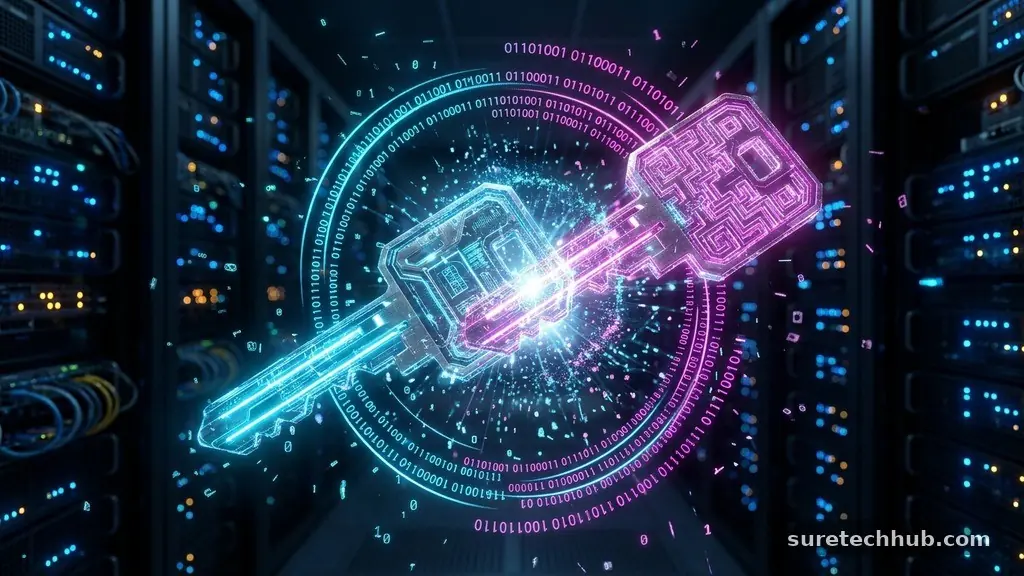
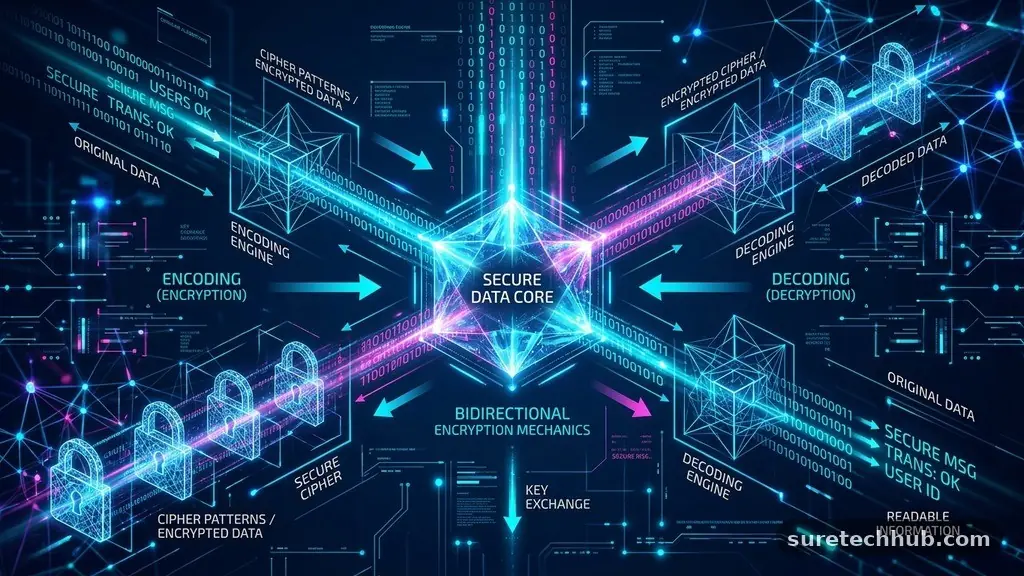
Two-way encryption, commonly referred to as symmetric encryption, is a cryptographic process where the same secret key is used for both the encryption and decryption of data. Unlike asymmetric systems that rely on a public and private key pair, this method requires both the sender and the receiver to possess an identical, pre-shared key.
When a piece of information is processed through an algorithm with this specific key, it is scrambled into ciphertext. This ciphertext appears as random, indecipherable noise to anyone who lacks the key.
The primary strength of this approach lies in its computational efficiency. Because the mathematical operations required for symmetric ciphers are less demanding than those used in asymmetric systems, they are ideal for high-speed data transfers.
Large files, streaming media, and database entries are frequently secured this way because the latency introduced by the encryption process is negligible. The speed allows for real-time protection without disrupting the user experience or causing significant lag in network performance.
However, the necessity of sharing the secret key introduces a unique security challenge known as key distribution. If an attacker intercepts the key during the exchange between the sender and the recipient, the entire security of the communication is compromised.
For this reason, systems often use a hybrid approach where asymmetric encryption is used to securely exchange the secret key, which is then used for the subsequent two-way encryption of the actual data. This combination provides the best of both worlds: secure key distribution and efficient bulk data processing.
Comparing Symmetric and Asymmetric Cryptography
To better understand where symmetric methods fit in the broader security landscape, it is helpful to contrast them with asymmetric alternatives. Asymmetric encryption, or public-key cryptography, uses a public key to encrypt data and a private key to decrypt it.
This removes the need for both parties to share a single secret key, which solves the distribution problem inherent in two-way systems. However, this convenience comes at the cost of processing speed.
| Feature | Symmetric (Two-Way) | Asymmetric (Public-Key) |
|---|---|---|
| Key Count | Single Shared Key | Key Pair (Public & Private) |
| Processing Speed | Very Fast | Slower |
| Primary Use Case | Encrypting Large Data | Secure Key Exchange |
| Complexity | Lower | Higher |
As shown in the table above, the choice between these methods usually depends on the specific requirement of the task at hand. Symmetric encryption is the workhorse of the digital world, handling the heavy lifting of protecting stored files and ongoing sessions.
Asymmetric encryption acts as the gatekeeper, establishing the initial trust required to share the symmetric keys safely. Most modern protocols, such as TLS (Transport Layer Security), rely on a sophisticated dance between these two technologies to keep your information safe.
Real-World Applications in Modern Computing
You likely interact with two-way encryption multiple times every day without even realizing it. One of the most common applications is found in full-disk encryption for laptops and mobile devices.
When you set a passcode for your phone, the underlying operating system uses symmetric algorithms to encrypt your photos, emails, and documents. If your device is lost or stolen, the information on the drive remains inaccessible because the encryption key is tied to your specific biometric or passcode input.
Another massive area of use is within database management systems. Companies that store sensitive customer information, such as credit card numbers or personal health records, must ensure this data is protected at rest.
By encrypting these database fields with symmetric keys, the organization ensures that even if a server is physically breached, the raw data remains gibberish. This is a standard requirement for compliance with regulations like PCI DSS and HIPAA, which mandate strict controls over how sensitive information is handled.
Finally, we see this technology at work in wireless communication protocols like WPA3, which secures your home Wi-Fi network. When you enter your Wi-Fi password, your router and your device use that password as a seed to generate symmetric keys.
These keys then encrypt every packet of data transmitted between your computer and the router. This prevents neighbors or malicious actors in the vicinity from “sniffing” your traffic to steal passwords or private information while you browse the web.
The Role of Algorithms in Data Protection
The effectiveness of any encryption system depends entirely on the strength of the underlying mathematical algorithm. The most famous and widely trusted standard today is the Advanced Encryption Standard, or AES, which was established by the National Institute of Standards and Technology. AES supports key lengths of 128, 192, and 256 bits, with 256-bit keys offering a level of security that is currently considered practically unbreakable by modern computing power.
An algorithm works by taking a block of plaintext and applying a series of complex transformations. These transformations involve substitution and permutation, which rearrange the bits in a way that is mathematically reversible only if you know the specific sequence of steps defined by the key.
Even if an attacker knows the algorithm being used, they cannot reverse the process without the key itself. The sheer number of possible combinations in a 256-bit key—2 to the power of 256—makes brute-force attacks mathematically impossible with current technology.
It is important to note that algorithms are not static; they evolve to combat new threats. As quantum computing advances, cryptographers are already developing “post-quantum” algorithms designed to resist attacks from future supercomputers.
The goal is to ensure that encrypted data intercepted today cannot be decrypted years from now by more powerful hardware. This practice, often called “harvest now, decrypt later,” is why using modern, industry-standard algorithms is essential for long-term data security.
Security Challenges and Best Practices
While two-way encryption is robust, it is not a silver bullet. The most significant vulnerability often lies not in the encryption itself, but in the management of the keys.
If an organization stores its encryption keys on the same server as the encrypted data, the security is effectively nullified. Proper key management involves using dedicated hardware security modules or cloud-based key management services that keep the keys isolated from the data they protect.
Another challenge involves the lifecycle of the data. Over time, keys may need to be rotated to limit the amount of data exposed if a specific key is compromised.
Key rotation policies ensure that old keys are retired and new ones are generated regularly, minimizing the impact of any potential leak. Furthermore, access control is vital; even if the data is encrypted, the system must authenticate users to ensure only authorized individuals can trigger the decryption process.
End-to-end encryption, a specific implementation of these concepts, has become a standard for messaging apps. In this model, the service provider itself does not have access to the keys, meaning they cannot decrypt the messages even if legally compelled to do so.
This provides a high level of privacy for users, as the keys reside strictly on the sender’s and receiver’s devices. While this creates challenges for law enforcement, it remains a pillar of digital privacy in modern communications.
The Future of Secure Communications
As we look toward the future, the integration of encryption into every layer of our digital infrastructure will only deepen. We are moving toward a reality where “encryption by default” is the industry standard for all software and hardware products. This shifts the burden of security away from the user and onto the developers, who are increasingly building these protections directly into the architecture of their applications.
The rise of decentralized identity and blockchain technology also relies heavily on advanced cryptographic techniques. In these systems, users maintain control over their own keys, allowing them to verify their identity or authorize transactions without relying on a central authority.
This empowers individuals to manage their digital footprints with a level of autonomy that was previously impossible. As these tools become more user-friendly, the average person will benefit from higher security without needing a degree in computer science.
Ultimately, the goal of these technologies is to preserve the integrity and confidentiality of our information. Whether you are a business owner protecting trade secrets or an individual safeguarding personal photos, understanding the basics of how these systems work is a form of digital literacy.
By staying informed about the tools available to us, we can navigate the online world with greater confidence and control. The silent work of these algorithms ensures that, despite the risks of the internet, our most important information remains ours alone.
Frequently Asked Questions
Is two-way encryption the same as end-to-end encryption?
Not exactly, though they are related. Two-way encryption describes the symmetric process of using one key for both locking and unlocking data. End-to-end encryption is a specific application where that process happens entirely on the user’s devices, ensuring that no third party, including the service provider, can ever access the keys.
Can two-way encryption be hacked?
In theory, any encryption can be broken if you have enough computing power and time. However, using modern standards like AES-256 makes it practically impossible for even the most advanced supercomputers to crack the code. Most “hacks” occur not because the encryption was broken, but because the keys were stolen or the system was misconfigured.
Why is it called two-way encryption?
The term is a simplified way to describe symmetric encryption, where the same key serves two roles: it locks the data and it unlocks the data. It flows in both directions using the same tool, unlike asymmetric systems which require two different tools for the two different tasks.
What happens if I lose my encryption key?
If you lose your key, the data is effectively gone forever. Because the encryption turns your files into random noise, there is no “password reset” function that can restore your access once the key is destroyed or forgotten. This is why robust key backup and recovery procedures are critical for any organization.
Does using encryption slow down my computer?
Modern processors have built-in hardware acceleration for encryption, meaning you likely won’t notice any speed difference. While there is a mathematical cost to the process, it is optimized to run in the background without impacting your daily tasks, streaming, or browsing.
Conclusion
Understanding what two-way encryption is and where it is used provides a vital look into the infrastructure that keeps our digital lives private. From the hardware in our pockets to the massive databases powering global commerce, this technology is the foundation of modern security. By utilizing symmetric keys and robust algorithms, we can ensure that our sensitive communications remain shielded from prying eyes.
As digital threats continue to evolve, staying aware of how these systems protect your information is more important than ever. Whether you are setting up a secure network or simply using a messaging app, you are participating in a global effort to maintain data integrity.
We encourage you to keep exploring these topics and to adopt best practices, such as using strong, unique passwords and enabling encryption features whenever they are available. Protecting your digital footprint starts with the simple, effective power of cryptography.